Fireboy and Watergirl 2
Related Games
Puzzle
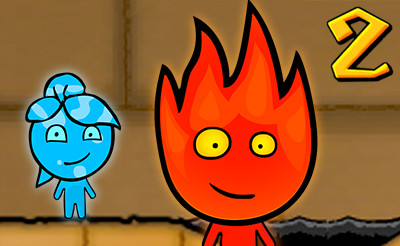
Fireboy and Watergirl 2: Light Temple continues the co‑op puzzle adventure as our elemental heroes explore a radiant temple filled with light‑based puzzles. This sequel introduces new mechanics including light switches, mirrors, and shadow obstacles, while maintaining the core teamwork gameplay that made the first game a classic.
Detailed Ratings
Overall rating: 4.6 / 5 – a worthy sequel that successfully expands on the original with new mechanics while maintaining the charm and co‑op focus.
Difficulty: 4 / 5 – the light‑based puzzles add complexity, making some levels more challenging than the first game, especially in the later stages.
Replay value: 4.5 / 5 – the new mechanics and temple setting provide a fresh experience, and the co‑op gameplay remains highly replayable with different partners.
Game Introduction
Fireboy and Watergirl 2: Light Temple builds upon the successful formula of the original game while introducing a fresh setting and new puzzle mechanics. After successfully navigating the Forest Temple, our two heroes now venture into a magnificent Light Temple, where ancient mechanisms powered by light and shadow create an entirely new set of challenges. The temple's golden architecture, glowing platforms, and luminous atmosphere provide a visually distinct experience that feels both familiar and refreshingly new.
The sequel maintains the core co‑operative gameplay that defines the series, where Fireboy and Watergirl must work together to solve puzzles, but now introduces light‑based mechanics that add depth to the puzzle solving. Light switches can illuminate dark areas or activate platforms, mirrors can redirect beams of light to power mechanisms, and shadow zones create new hazards that require careful navigation. These additions create more complex puzzles that build upon the foundation established in the first game, rewarding players who mastered the original while offering new challenges to explore.
With 32 new levels set in the Light Temple, the game offers a substantial adventure that feels like a natural evolution of the series. The difficulty curve is well‑balanced, starting with levels that introduce the new light mechanics gradually, then ramping up to complex puzzles that combine all elements—fire, water, light, and shadow—into intricate challenges. Whether you are returning from the Forest Temple or discovering the series for the first time, Fireboy and Watergirl 2 delivers an engaging co‑op puzzle experience that emphasizes teamwork, communication, and clever problem‑solving.
How to Play
The gameplay in Light Temple follows the same fundamental structure as the original: guide both Fireboy and Watergirl to their respective exit doors while collecting all gems along the way. However, the Light Temple introduces several new mechanics that change how you approach puzzles. Light switches can be activated to illuminate dark areas, reveal hidden platforms, or power mechanisms that open doors or move platforms. Some switches affect the entire level, while others control specific sections, requiring you to understand the light system's logic.
Mirrors play a crucial role in many puzzles, as they can redirect beams of light to reach switches or power sources that are otherwise inaccessible. Positioning mirrors correctly often requires both characters to work together—one might need to hold a mirror in place while the other activates a switch, or both might need to position multiple mirrors to create a complete light path. Shadow zones add another layer of complexity, as certain areas become dangerous when in shadow, forcing you to maintain light sources or time your movements carefully. The combination of these new elements with the classic fire‑water mechanics creates puzzles that feel fresh while maintaining the series' signature cooperative gameplay style.
PC & Mobile Controls
On PC, the controls remain the same as the first game: use the arrow keys to control Fireboy (Up to jump, Left and Right to move) and the W, A, and D keys to control Watergirl (W to jump, A and D to move). The new light mechanics are activated by interacting with switches and mirrors using the same movement controls—simply move a character onto a switch or position them to interact with mirrors. The controls are responsive and allow for precise positioning needed for the more complex light‑based puzzles.
On mobile devices, the game uses touch controls similar to the first installment, with on‑screen buttons or swipe gestures for movement and jumping. The light mechanics work seamlessly with touch controls—tapping switches or positioning characters near mirrors activates the light systems. Some mobile versions support two‑player co‑op with split screen controls, making it easy to coordinate light‑based puzzles with a partner. The touch interface is intuitive, though the precision required for some mirror puzzles may take practice.
Tips & Tricks
Pay close attention to how light switches affect the level—some create permanent changes while others are temporary, so plan your route accordingly before activating switches.
When working with mirrors, think about the complete light path from source to target; sometimes you need to set up multiple mirrors in sequence, which requires coordination between both characters.
Shadow zones can be tricky—remember that you can often use light switches or mirrors to illuminate dangerous shadow areas before attempting to cross them.
In co‑op mode, assign roles: one player can focus on light mechanics while the other handles character movement, or take turns activating switches and positioning mirrors to maximize efficiency.
Level Information
The early levels (1‑8) introduce the basic light mechanics: simple light switches, basic mirror usage, and how light affects platforms and doors. These levels help players understand the new systems while maintaining familiar puzzle structures from the first game.
Mid‑level stages (9‑20) combine light mechanics with more complex layouts, introducing multiple light sources, shadow zones, and puzzles that require precise mirror positioning. The difficulty increases as you must manage both the classic fire‑water hazards and the new light‑shadow elements simultaneously.
Advanced levels (21‑28) feature intricate puzzles that require understanding the complete light system, with multiple switches, mirrors, and shadow zones that must be navigated in the correct sequence. These levels test your ability to plan ahead and coordinate both characters effectively.
The final levels (29‑32) are the most challenging, combining all mechanics into complex multi‑step puzzles that require perfect timing, precise positioning, and excellent teamwork. These levels reward players who have mastered both the classic mechanics and the new light‑based systems.
Game Tags
Game Details
Screenshots